Every founder I work with comes to me with the same 5 fundamental hurdles. Challenges that can feel impossible to solve. But taking just the first step to improving each of these 5 challenges, transforms the scalability of your digital revenue streams.
You’ve built a business that works, but transitioning to a digital-first strategy often feels like a series of expensive “maybes.” It doesn’t have to be. By taking just one action toward solving these five hurdles, you can transform your digital presence from a cost centre into a scalable revenue engine.
Let’s turn those “maybes” into a roadmap of strategic wins.
1. "We still rely on word-of-mouth. Can we actually afford to build a digital pipeline?"
The “referral trap” is a comfortable place to be. Relying on your network means your growth is capped by the size of that network. The fear here is usually capital risk, you don’t want to throw hard-earned cash at a digital “black hole” when your current leads come for free.
The Root Cause: Many companies view digital marketing as a separate, external expense rather than a way to digitise their existing reputation. If you aren’t capturing those word-of-mouth stories and putting them where your next 100 customers are looking, you’re leaving your most valuable asset on the table.
The First Step: Look at your last five wins. Identify exactly why they bought from you and turn those specific insights into “social proof” assets (case studies or posts) to prime your digital audience.
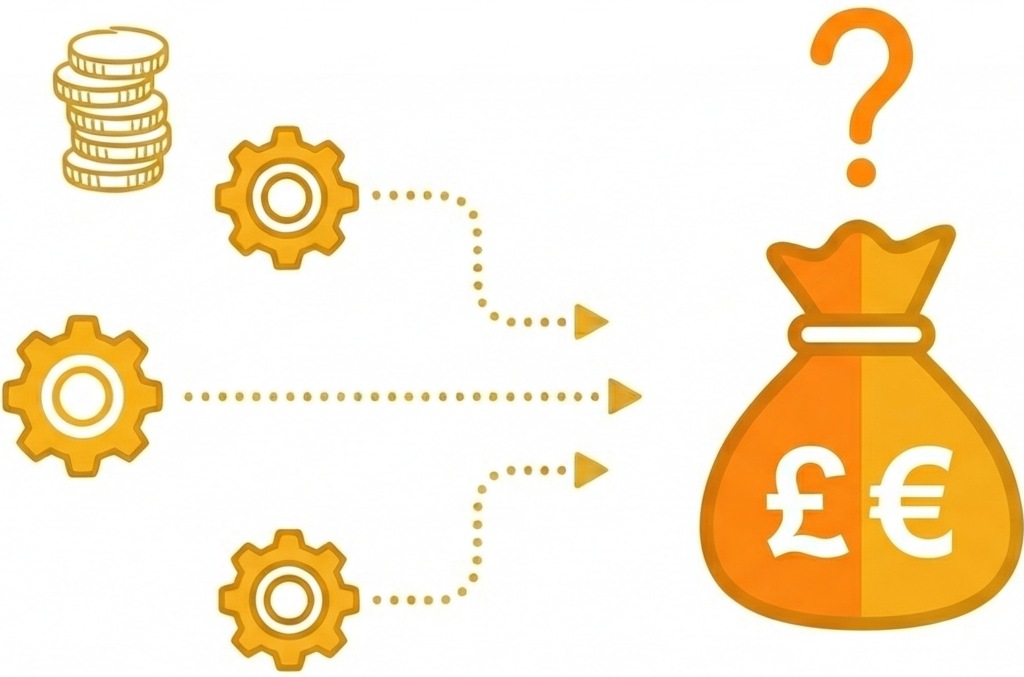
2. "We’re investing bit-by-bit, so why aren't we seeing any revenue drivers?"
It feels like you’re doing the right things, a little SEO/GEO here, a few posts there, but the needle isn’t moving. It’s frustrating because you’re technically “in the game,” but the marketing ROI remains at zero.
The Root Cause: This is the “Threshold Effect.” Marketing requires a certain amount of pressure to break through the noise. By spreading a small budget across four or five different tactics, none of them ever reach the “boiling point” needed to generate a lead. You’re warming up five pots of water, but none of them are making tea.
The First Step: Pick your “warmest” channel, the one where your customers actually hang out. Move 80% of your current marketing effort there for 90 days. Focus beats fragments.
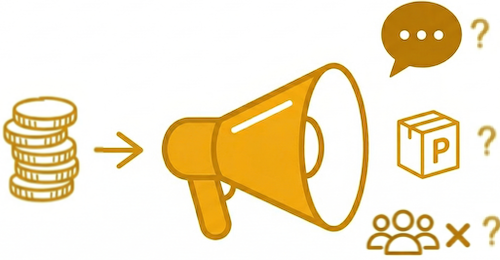
3. "We’re shouting into a void. Is it the message, the product, or just the wrong people?"
There is nothing more draining than putting out high-quality content or outreach and getting total silence. You start second-guessing everything: Is the product actually good? Is my CTA button text wrong? Are we even targeting the right industry?
The Root Cause: Usually, it’s a lack of “Commercial Empathy.” When we scale, we tend to talk more about our product’s features and less about the specific, burning pain the buyer on the other end is feeling at 8:00 AM on a Monday. Silence usually means your message is “nice to have,” but not “must-solve.”
The First Step: Interview three of your best clients. Ask them what they were worried about the day before they bought from you. Use their exact language to rewrite your primary outreach message.
4. "Our product is world-class, but our digital presence looks... amateur."
You know your product or service is the best in the market, but when you look at your website or your slide decks, they don’t reflect that level of sophistication. There is a “quality gap” that makes you hesitant to point high-value prospects toward your digital channels.
The Root Cause: This is a positioning misalignment. As you scale, the “scrappy startup” look starts to work against you. High-ticket B2B buyers—especially in SaaS or Green Tech—need to feel a sense of institutional stability. If your comms don’t look as good as your product feels, you’re creating a “trust tax” that slows down every sale.
The First Step: Review your “first impression” touchpoints (LinkedIn profile, website home page, initial deck). Ensure the visual weight and the “voice” of the brand align with the high-value problems you solve.
5. "We’re juggling too many approaches and I’m terrified to stop any of them."
You’re doing newsletters, cold outreach, adverts, and SEO. You’re exhausted, your team is stretched thin, and while nothing is working perfectly, you’re worried that if you stop one, the whole house of cards will fall.
The Root Cause: This is “Strategy Bloat.” It comes from a fear of missing out on a channel where a competitor might be. In reality, most scale-ups only need one or two high-performing channels to reach their next milestone. Doing two things with 100% focus is infinitely more profitable than doing five things at 20%.
The First Step: Run a “Kill/Keep” session. Rank every activity by “Effort vs. ROI.” Be ruthless: pause anything that hasn’t contributed to a discovery call in the last six months and reallocate that energy into your top performer.
Making the Shift
Scaling your communications isn’t about being everywhere, it’s about being undeniably relevant in the few places that matter to your ROI. It’s about moving from “shouting” to “solving.”