5 pitfalls of moving beyond founder-led sales

When you scale, don't let scale replace judgement...

There's a moment in every scale-up's life when the thing that got you here stops being enough to get you there.

For most B2B and SaaS founders, that thing is you. Your network, your credibility, your ability to read a prospect and adapt on the spot. It’s an incredibly effective growth engine, until it isn’t, because it doesn’t scale, and you can’t be in every room.


So you build the machine: a sales team, a marketing function, an automated pipeline, dashboards. This is necessary and right. But the transition from personal, relationship-led selling to a repeatable, semi-automated revenue engine is where I see otherwise well-run scale-ups quietly lose the thing that made them work. Not because the strategy was wrong, but because the execution rushed past the parts that don’t show up on a slide.


Here are five mistakes I see most often, and what to do instead.

1. Mistaking "process" for "relationship"

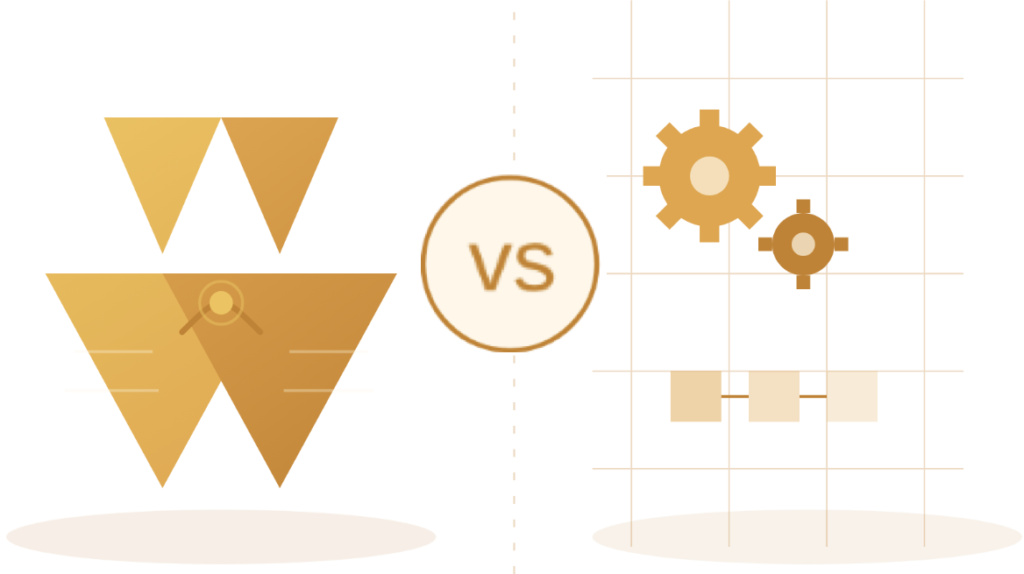
Two figures in warm connection vs. a mechanical grid of gears, illustrating relationship vs process

The instinct once you have some traction is to rinse and repeat everything you do and hope it scales well. Your sequences, templates, and scoring models replicated as they are. It’s the right instinct, applied too bluntly.


Founders and early sales hires close deals because they listen, adapt, and build trust in real time. A process built purely for efficiency strips that out and replaces it with volume.


The result is a pipeline that looks healthy on a dashboard and converts poorly, because prospects can feel the difference between being sold to and being understood.


The fix: build process around your best qualitative sales conversations, not instead of them. Record and dissect what actually got deals over the line, the specific objections handled, the language that landed and scale that into your processes. Automate the repetitive parts of the journey (scheduling, follow-up, data capture) so your team has more time for the parts that still need a human, not less.

2. Scaling acquisition before you've engineered retention

A gold funnel filling with small triangles at the top representing new customers, with a crack in the side letting droplets leak out while a steady stream continues down the neck, illustrating acquisition growth undermined by poor retention.

It’s tempting to pour every resource into the top of funnel, because new logos are visible and exciting to the board. But for subscription and recurring-revenue businesses in particular, growth built on acquisition alone is growth with a hole in the bucket. If churn isn’t addressed with the same rigour as new business, you’re paying to refill a leak.


The fix: before you scale spend on acquisition, get honest about your retention numbers and the loops driving them: onboarding, activation, expansion, renewal conversations. A scale-up with a slower but sticky acquisition engine and strong retention will consistently out-earn one with faster, leakier growth.

3. Letting the CRM become the strategy

A compass with tick marks pointing toward a target, half obscured by an oversized dashboard screen filled with disconnected bar, line, and pie charts, illustrating tooling overtaking strategy.

Once a CRM and marketing automation platform go live, there’s a real risk that the tool starts dictating the approach rather than supporting it. Teams end up optimising for what’s easy to track (email opens, MQL counts) rather than what actually drives revenue. Reporting becomes an exercise in vanity metrics that keep everyone busy without keeping the business capital-efficient.


The fix: define your commercial KPIs before you build out the tooling, and tie every metric back to revenue and cash flow, not activity. If a report doesn’t inform a decision a Director or Founder would actually make, it’s noise. Build the tech stack to answer the questions the business needs answered, not the other way round.

4. Hiring for volume before you've defined what "good" looks like

A founder figure following one confident solid path to a clear target, while several new-hire figures depart from the same point along scattered, dashed, diverging paths, illustrating unclear hiring criteria.

A common scaling mistake is hiring a sales or marketing team ahead of having a genuinely repeatable, understood process for what wins. You end up with new hires reverse-engineering the founder’s instinct from incomplete information, each doing it slightly differently, and a widening gap between top and bottom performers that no amount of training seems to close.


The fix: document your ideal customer profile, your buying triggers, and your actual sales narrative with real precision before you hire at scale. New team members should be able to perform close to your best rep within weeks, not months, because the “why we win” logic is explicit rather than tribal knowledge sitting in the founder’s head.

5. Treating marketing and sales as sequential, not integrated

Two triangular towers, one for marketing and one for sales, connected by a bridge with a gap in the middle, with deal papers falling through the gap, illustrating lost handoffs between functions.

As companies scale, marketing and sales often get built as separate functions with separate targets, and the handoff between them becomes the place deals go to die. Marketing is judged on leads generated and sales on leads closed. Nobody owns the full revenue journey, and the friction shows up as slower cycles and lower conversion, right at the point you most need efficiency.


The fix: build a single commercial roadmap with shared metrics across acquisition, conversion, and retention, and put someone senior enough in charge of the whole funnel to make trade-offs across it. This is precisely the gap a fractional CMO is often brought in to close, someone who can sit across both functions and keep the metrics that matter — capital efficiency and measurable ROI — as the north star, rather than departmental targets that pull in different directions.

The underlying principle

None of this is an argument against scaling, automating, or building a proper commercial infrastructure. It’s an argument against doing it carelessly. The scale-ups that grow past the plateau are the ones that treat the transition from founder-led sales to a built-out engine as a design problem worth solving properly, not an admin task to delegate and forget.

If you’re navigating this stage and want a second pair of eyes on where the gaps are, get in touch for an exploratory call.

Share This Post

Issy Nancarrow

Growth Marketing Specialist